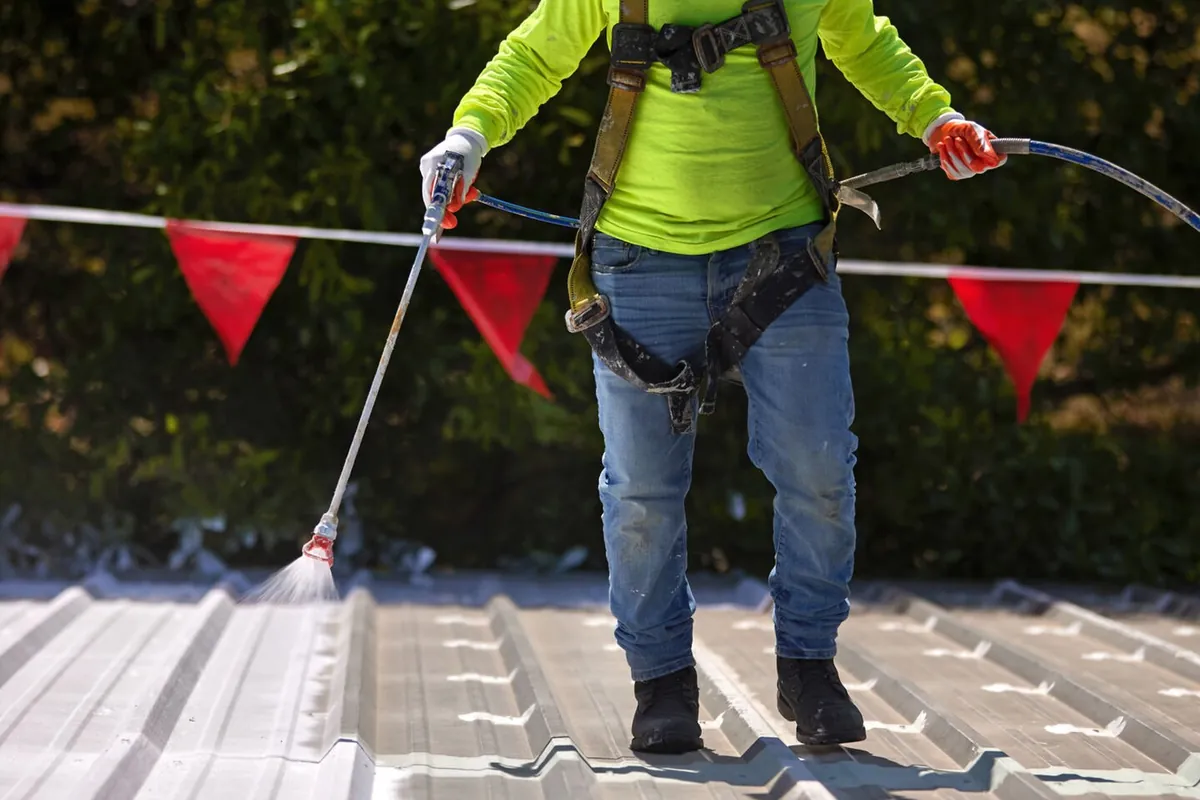
A urethane roof coating (polyurethane) is a liquid-applied coating that cures into a hard-wearing, elastic film. The Roof Coatings Manufacturers Association counts polyurethane among the most common roof coating types, alongside acrylic and silicone, and GAF makes urethane coatings as part of its liquid-applied roofing line.
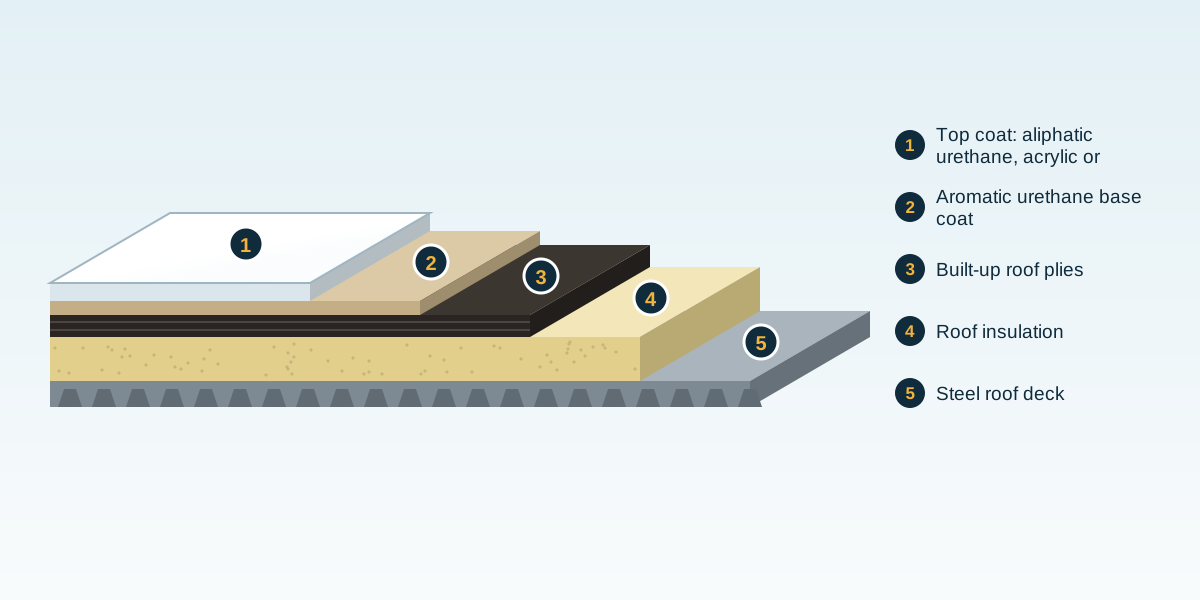
Where silicone is chosen for ponding water and acrylic for economy, urethane is chosen for toughness. It is usually the first coat in a system, protecting a spray foam or asphaltic roof, with a reflective top coat over it. Commercial coating in Houston starts at $2.50 per square foot, typically about a third of the cost of a new roof; the system and the warranty term set the final price.
Aromatic and Aliphatic: Two Kinds of Urethane
Urethane roof coatings come in two families, and a urethane system normally uses them in that order.
Aromatic urethane: the base coat
Manufacturer data sheets describe aromatic urethane as a moisture-cure base coat that forms a tough film, protects foam roofs and resists oil migration from asphalt-based roofs. They are also clear that it is not a finish coat: it has to be covered with a top coat for UV resistance and reflectivity.
Aliphatic urethane: the top coat
Aliphatic urethane is the sunlight-resistant version, used as a reflective white top coat over an aromatic base. Depending on the system, the top coat can also be acrylic or silicone.
Where Urethane Makes Sense
- Spray foam roofs. Foam has to be covered to survive the sun, and a tough urethane base coat is a common first layer. See spray foam roofing.
- Asphaltic roofs. Aromatic urethane resists the oils that migrate out of modified bitumen and built-up roofs. See mod-bit & BUR restoration.
Urethane is not the default for every roof. On a flat roof whose main problem is ponding water, silicone is usually the better fit. On a sloped metal roof where cost per square foot drives the decision, acrylic often is.
Urethane vs. Silicone vs. Acrylic
| Urethane | Silicone | Acrylic | |
|---|---|---|---|
| Main strength | Toughness; protects foam and asphalt | Ponding water and UV | Lower cost per square |
| Usual role | Base coat, with an aliphatic, acrylic or silicone top coat | Field coat in one or more coats | Base coat plus top coat |
| Ponding water | Depends on the product | Stands up to it (GAF) | Restricted |
| Recoating a siliconed roof | Not for use over silicone (aliphatic data sheets) | Yes, silicone over silicone | Check the product data sheet |
What to Ask About a Urethane System
- Which top coat goes over the base? An aromatic urethane left without a top coat will not hold up in the sun.
- What happens at the next recoat? Plan the future restoration now, because once a roof goes to silicone, urethane can't follow it.
- How are rooftop air intakes handled during application? Urethane data sheets list isocyanates among the ingredients, so ask any contractor how intakes and building access will be managed while it goes on.
- Which warranty, and for how long? GAF's liquid-applied guarantees run 10 to 20 years depending on the system and the contractor's certification level. See GAF roof coating warranty.
Every system choice comes after the roof survey: moisture scan, adhesion tests and a look at how the roof drains and how it's used. Use the roof coating cost calculator for a ballpark first if that helps.
Sources: RCMA: About Roof Coatings · GAF roof coatings.
Urethane Roof Coating FAQ
A urethane, or polyurethane, roof coating is a liquid-applied coating that cures into a tough, elastic film. It is one of the most common roof coating types, alongside acrylic and silicone, and it is usually used as a base coat under a reflective top coat.
Aromatic urethane is the base coat. Manufacturers describe it as a tough film that protects foam roofs and resists oil migration from asphalt roofs, but it is not a finish coat. Aliphatic urethane is the UV-resistant top coat that goes over it. Acrylic or silicone can also serve as the top coat, depending on the system.
Not across the board. Urethane is chosen for toughness and as a base over foam and asphaltic roofs. Silicone is chosen for ponding water and long sun exposure. The roof's drainage, its surface and how much traffic it gets decide between them.
No. Aliphatic urethane data sheets say not to apply the coating to silicone roof materials. A roof that already has silicone is normally recoated with silicone.
Yes. Spray foam has to be covered to protect it from sunlight, and manufacturers make aromatic urethane base coats specifically to protect foam roofs, with a reflective top coat over them.
Wondering whether a urethane system fits your roof? Call (832) 224-3435 or request a free roof survey.