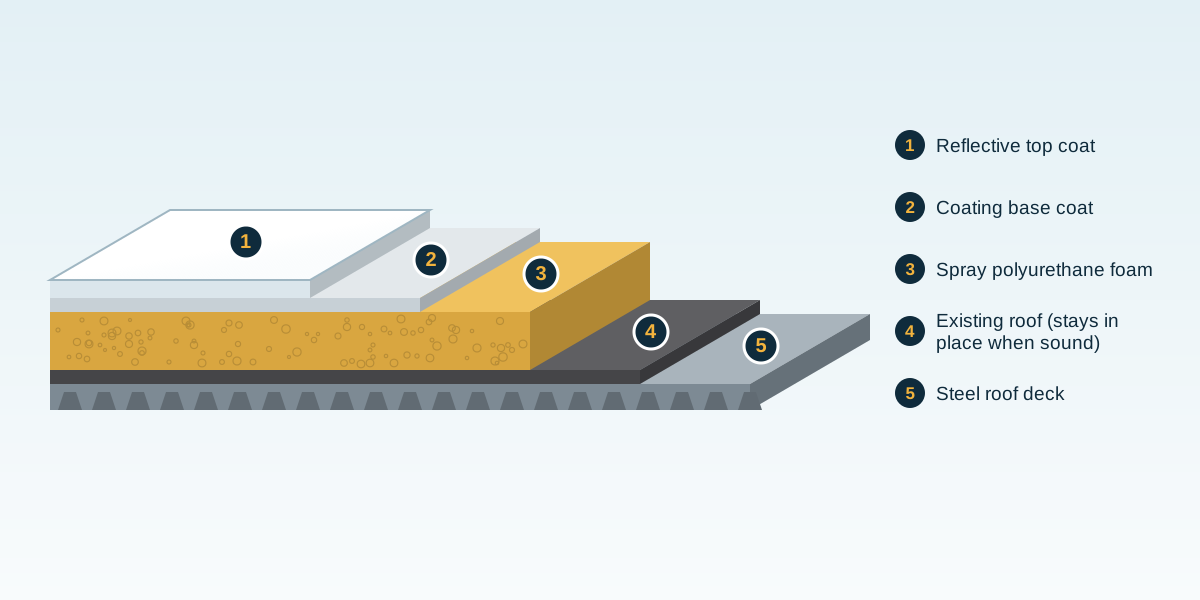
Spray foam roofing, or SPF, is a two-part polyurethane foam sprayed onto the roof as a liquid. It expands and cures into a rigid, closed-cell layer that bonds to the surface below and runs continuously across the roof, with no seams or fasteners. A reflective coating then goes over the foam to protect it from sunlight.
For a Houston building owner, spray foam roofing does two jobs at once: it adds insulation on top of the deck, and it becomes the new waterproof surface. We install new SPF roof systems and recoat existing foam roofs, and the coating over the foam is always a GAF coating.
What Spray Foam Does on a Commercial Roof
The Spray Polyurethane Foam Alliance (SPFA), the industry's trade group, describes an SPF roof as a seamless, continuous layer that works as a vapor retarder, a weather-resistant barrier, an air barrier and continuous thermal insulation all at once. Its other points worth knowing:
- Insulation. SPFA puts typical closed-cell spray foam at about R-5.8 to R-6.9 per inch, so the foam thickness can be chosen for the insulation you want, not just for waterproofing.
- Weight. SPFA notes the installed weight per square foot is low compared with heavier roofing systems, which matters on older buildings and long-span metal structures.
- Storms. SPFA reports that post-hurricane roof surveys by NIST and the Roofing Industry Committee on Weather Issues (RICOWI) found SPF roofs performed well, and that the rigid foam resists damage from hail and foot traffic.
- Fire rating. According to SPFA, most SPF roofing systems offer Class A fire performance. The rating belongs to the tested assembly, so it should be confirmed for the specific foam and coating used.
- Service life. SPFA says SPF roofs can last more than 20 years with regular care, and that regular inspection and recoating can extend that to 40 years or more.
Why the Coating Matters
Foam is the insulation and the waterproofing, but the coating is what keeps the foam alive. Sunlight breaks down exposed foam, so an SPF roof is only as good as the coating layer on top and how well that layer is maintained. That is why the recoat schedule is part of owning a foam roof, and why SPFA ties the long service lives above to inspection and recoating.
We coat foam roofs with GAF coatings. GAF makes Diathon, a water-based acrylic base coat and top coat made specifically for spray polyurethane foam, and it lists spray foam among the roof surfaces its silicone coatings restore. Which GAF coating goes over your foam depends on drainage, foot traffic and the warranty term you want: see silicone and acrylic.
GAF's Diathon instructions also spell out what the foam needs first: positive drainage, a clean and dry surface with no trapped moisture, and damaged foam, flashings and penetrations repaired. On a foam roof that was coated before, test patches confirm the new coating will bond.
New SPF Roof or Recoat?
Recoating an existing foam roof
If you already have a foam roof and the coating is worn, chalky or thin, a recoat can put it back in service before the foam itself is damaged. The roof is cleaned, damaged foam is cut out and repaired, and a new coating goes on. Catching it while only the coating is worn keeps the job a recoat instead of a repair.
A new spray foam roof
A new SPF roof is a bigger project than a coating, because the foam layer is added before the coating goes on. It makes sense when you want insulation as well as a new roof surface, or when the existing roof has too many seams and transitions to restore with a coating alone. Whether the foam can go over your existing roof or needs a bare deck depends on what the survey finds: SPFA publishes separate evaluation criteria for both situations, and wet or saturated material has to come out first.
Spray Foam Roofing Cost
Spray foam roofing costs more than a coating alone, because the foam is an extra layer of material and labor before the coating goes on. We don't publish a per-square-foot range for spray foam roofs; we price them after the survey, once the foam thickness, the existing roof and the coating system are known. For coating-only projects, the roof coating cost calculator gives a ballpark.
During Installation
SPFA advises that access to the work area be restricted during and right after spraying to people wearing the right protective equipment, and that each foam manufacturer sets a re-occupancy time. On an occupied building, that means planning rooftop air intakes, entrances and schedules before the work starts.
Sources: Spray Polyurethane Foam Alliance: Commercial · SPFA FAQs · GAF silicone over asphaltic.
Spray Foam Roofing FAQ
Spray foam roofing costs more than a coating alone, because a layer of foam goes down before the protective coating. We price SPF roofs after a roof survey, once the foam thickness, the condition of the existing roof and the coating system are known, so we don't publish a per-square-foot range for them.
The Spray Polyurethane Foam Alliance says SPF roofs can last more than 20 years with regular care, and that regular inspection and recoating can extend the service life to 40 years or more. The coating is the part that wears, so keeping it in good shape is what protects the foam.
Yes. Sunlight breaks down exposed foam, so every SPF roof gets a protective coating, and that coating is renewed over the life of the roof. We use GAF coatings, such as GAF's Diathon acrylic system made for spray foam, or GAF silicone.
Sometimes. The Spray Polyurethane Foam Alliance publishes criteria for evaluating an existing roof before foam goes over it, and separate criteria for foam on a bare deck after a tear-off. Wet or saturated material must be removed first. The roof survey and moisture scan tell us which route your building needs.
The Spray Polyurethane Foam Alliance reports that post-hurricane surveys by NIST and RICOWI found SPF roofs performed well, and that the rigid foam resists damage from hail and foot traffic. Its insulation value also works in Houston's long cooling season. Like any roof, it depends on a sound installation and a maintained coating.
Want to know whether foam or a straight coating makes more sense for your building? Call (832) 224-3435 or request a free roof survey.