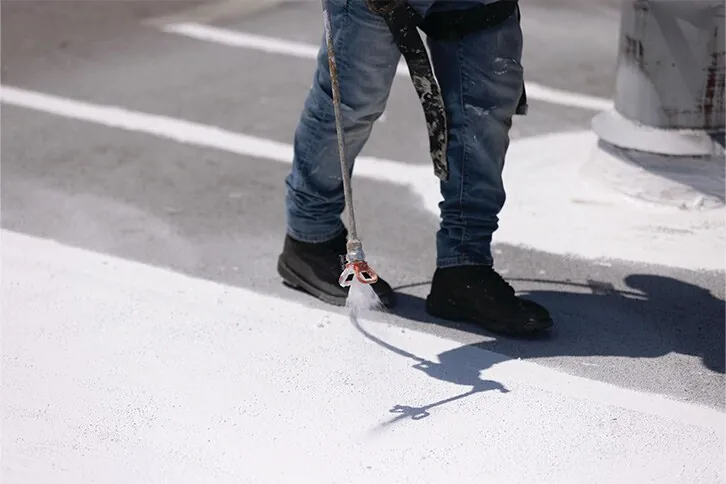
A silicone roof coating is a liquid-applied membrane that cures into a seamless, waterproof surface over the roof you already have. On Houston's warehouses, retail centers and office buildings it is often the right coating for one practical reason: low-slope roofs here pond, and silicone is the chemistry GAF builds for ponding water.
We install GAF silicone systems as a GAF CoatingsPRO+ contractor. Coating starts at $2.50 per square foot, typically about a third of the cost of a new roof, and a silicone system can carry a GAF No Dollar Limit warranty of up to 20 years, depending on how thick it is applied.
Why Silicone Suits Houston Flat Roofs
It stands up to ponding water
GAF describes its silicone coatings as able to "stand up to ponding water," and that is the line that usually decides it. Acrylic coatings are restricted from surfaces where water ponds, so on a flat roof with soft spots, low drains or a sagging deck, silicone is the realistic option.
A coating is not a drainage fix, though. The Roof Coatings Manufacturers Association is blunt that every roof should be built to drain, and GAF's own silicone steps include adding sheet metal crickets behind rooftop units where water collects. If the survey shows standing water caused by a drainage problem, we'll point it out before you buy a coating to solve it.
It takes the sun
GAF says its silicone forms a flexible, monolithic membrane that "won't degrade, chalk, or crack from prolonged exposure to direct sunlight." A white silicone surface also reflects sunlight that a dark roof would soak up, which keeps the roof and the space under it cooler. How much that saves depends on your insulation and HVAC, so we don't promise a percentage.
It goes on fast
Silicone cures with moisture from the air, and GAF notes that silicone dries faster than acrylic and that consecutive coats can often go on the same day. In a Houston summer with afternoon storms, a shorter window between coats matters.
Roofs We Coat With Silicone
GAF lists silicone for restoring existing metal, asphaltic, aged single-ply, spray foam and previously coated roofs. In practice that covers the common commercial roof types:
- Metal roofs on warehouses, shops and metal buildings. See metal roof restoration.
- TPO and PVC membranes that are weathered but still attached and sound. See TPO & PVC restoration.
- Modified bitumen and built-up roofs, smooth or granulated, with a bleed-blocking primer first. See mod-bit & BUR restoration.
- Spray foam roofs that need a new protective coat. See spray foam roofing.
How a GAF Silicone System Goes On
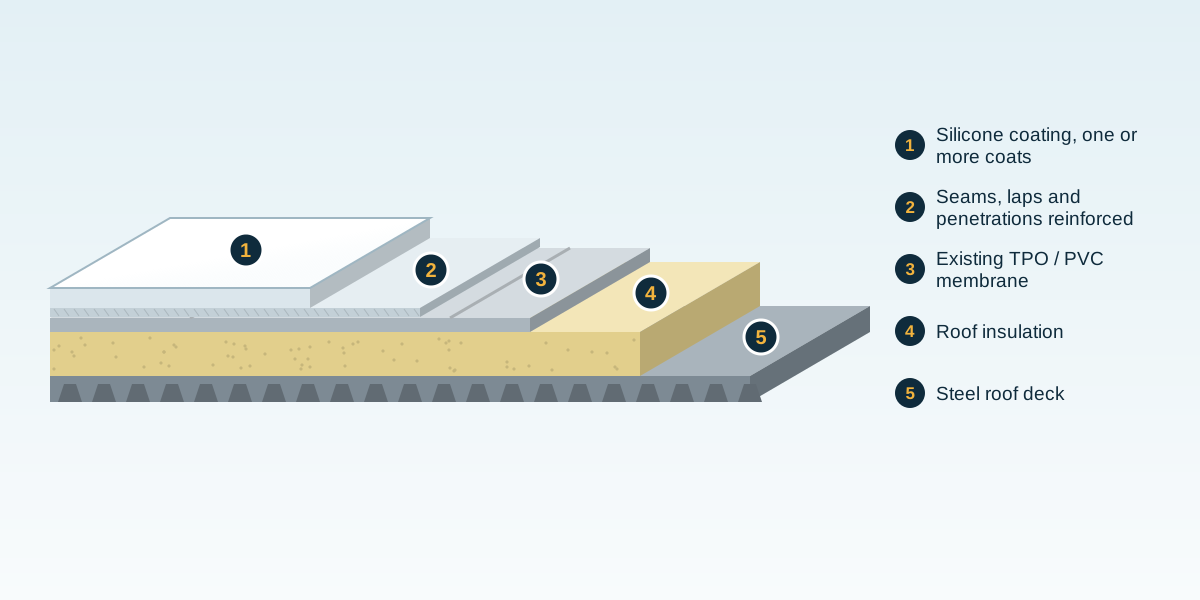
GAF publishes its installation steps for silicone over metal and over asphaltic roofs. This is the sequence we follow, and it is why our quotes come after the survey, not before it.
- Qualify the roof. The roof has to be clean, dry and tight. We scan for wet areas and run adhesion tests so we know the coating will bond.
- Prepare it. Wet membrane and insulation are cut out and replaced with like material, loose or missing fasteners are secured or replaced, and the roof is power washed with GAF Cleaning Concentrate.
- Prime where the substrate calls for it. Asphaltic roofs get a bleed-blocking primer so the asphalt doesn't stain through the white coating.
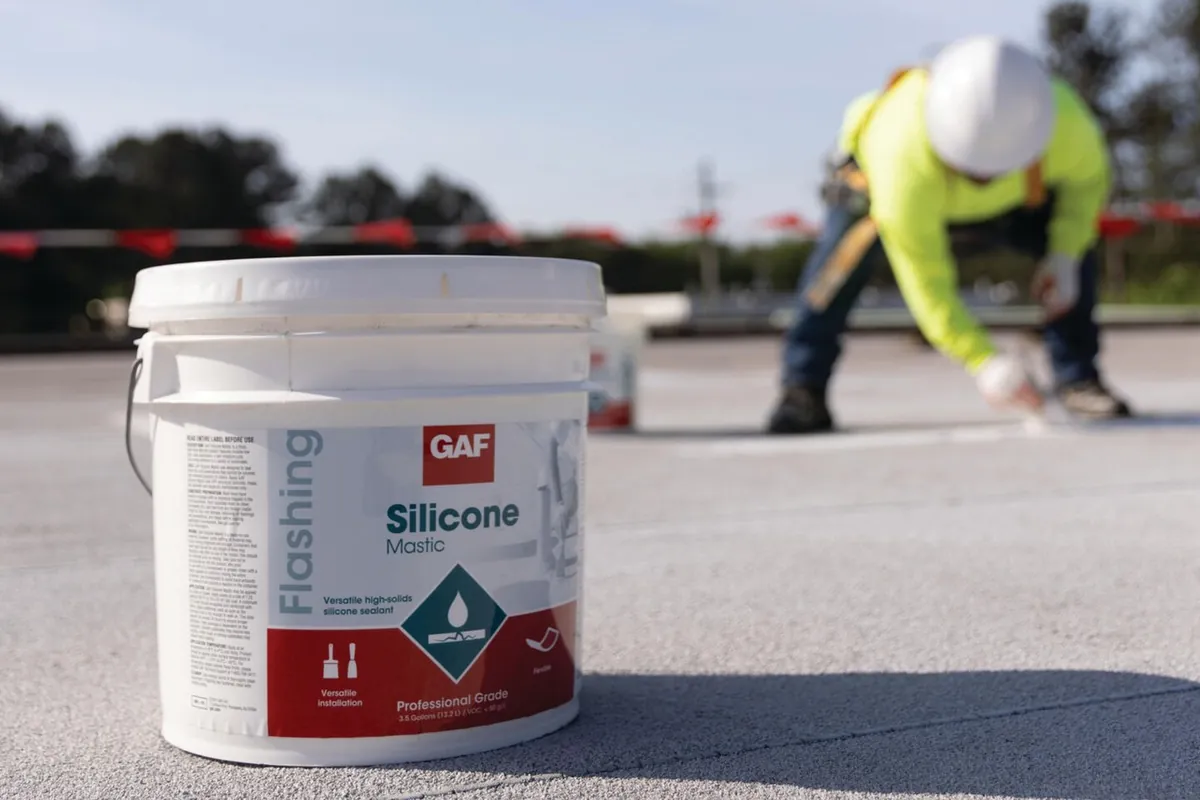
- Treat seams, fasteners and penetrations. Seams, curbs and drains are sealed with GAF Silicone Mastic, with GAF Premium Fabric embedded where the joint is loose or moves. Exposed fasteners are encapsulated one by one.
- Coat the roof. GAF Unisil Silicone goes on in at least two coats; GAF's high-solids silicone can go on in one or more coats, and a one-coat system is only for roofs of 2:12 slope or less. The crew checks wet mil thickness as it goes, because the thickness is what the warranty term is built on.
Thickness Sets the Warranty Term
GAF's silicone systems are specified for 10, 15 or 20-year terms, and the difference between them is how much coating goes on the roof. That is why two silicone quotes for the same roof can be far apart in price: one may be priced at the 10-year rate and the other at the 20-year rate.
Our proposals state the coating system, the application rate, the resulting thickness and the warranty term, so you can compare like with like. GAF's Diamond Pledge No Dollar Limit guarantee, which only a CoatingsPRO+ contractor can issue, covers leaks through the coating including workmanship in applying it. Details are on our GAF roof coating warranty page.
Before You Choose Silicone
- Future recoats are silicone. Once a roof is siliconed, the next restoration is normally silicone too. Some coatings, urethane top coats among them, are labeled by their makers not to go over silicone.
- Acrylic costs less per square foot. GAF calls acrylic the more economical coating per square. On a sloped metal roof that sheds water, acrylic may be the better value.
- The roof underneath still matters. A coating over saturated insulation traps the water. If the survey finds a roof that's past saving, we'll say so and walk you through coating versus replacement.
For a ballpark on your building, try the roof coating cost calculator.
Sources: GAF silicone over metal · GAF silicone over asphaltic · Roof Coatings Manufacturers Association FAQs.
Silicone Roof Coating FAQ
Most commercial coating projects in Houston run about $2.50 to $4.50 per square foot. Where a silicone job lands in that range depends mostly on the thickness needed for the warranty term, the amount of wet roof that has to be replaced, and how many seams, fasteners and penetrations need detailing. A full commercial replacement typically runs $8 to $16 per square foot.
GAF specifies its silicone coating systems for 10, 15 or 20-year terms, and the term depends on how much coating is applied. GAF also notes that many of its coating systems can be renewed with another coat as they wear, instead of being torn off.
GAF describes its silicone coatings as able to stand up to ponding water, which is why silicone is the usual choice for flat roofs that hold water. A coating does not fix poor drainage, though. Where water collects behind rooftop units or at low spots, GAF's installation steps include adding crickets, and we include drainage fixes in the proposal when the survey calls for them.
GAF lists previously coated roofs among the surfaces its silicone can restore, provided the old coating is sound and passes an adhesion test. A roof that already has silicone on it is normally recoated with silicone, because many other coatings are not made to bond to it.
It depends on the product and the warranty term. GAF Unisil Silicone goes on in at least two coats, and GAF's high-solids silicone can go on in one or more coats, with one-coat systems limited to roofs of 2:12 slope or less. The total thickness is what sets the warranty term, so the proposal lists the application rate.
Want to know whether your roof is a good candidate for silicone? Call (832) 224-3435 or request a free roof survey.