An acrylic roof coating is a water-based elastomeric coating that dries into a flexible, reflective white membrane. GAF positions its acrylic coatings for "normal weathering, aging, and UV exposure on roofs that need moderate restoration," and that is a fair description of where acrylic earns its place: sloped metal roofs and well-drained flat roofs that are weathered but sound.
We install GAF acrylic coating systems, including GAF's fabric-reinforced Premium Acrylic HydroStop system for metal roofs. Coating starts at $2.50 per square foot in Houston, typically about a third of the cost of a new roof, and GAF itself describes acrylic as the more economical choice per square compared with silicone.
Where Acrylic Works, and Where It Doesn't
The deciding question is drainage. Acrylic product data sheets restrict acrylic from surfaces prone to ponding water. On a Houston flat roof that holds water after a storm, acrylic is off the table and silicone is the usual answer.
- Sloped metal roofs on warehouses, shops and metal buildings
- Low-slope roofs with positive drainage and no standing water
- Smooth or granulated asphaltic roofs that need moderate restoration, over a base coat
- Projects where a lower cost per square foot matters more than the longest possible term
- Roofs with ponding water or low areas that stay wet
- Roofs that already have silicone on them
- Roofs where you want a 20-year term over an asphaltic surface with a plain acrylic system
Two GAF Acrylic Systems We Install
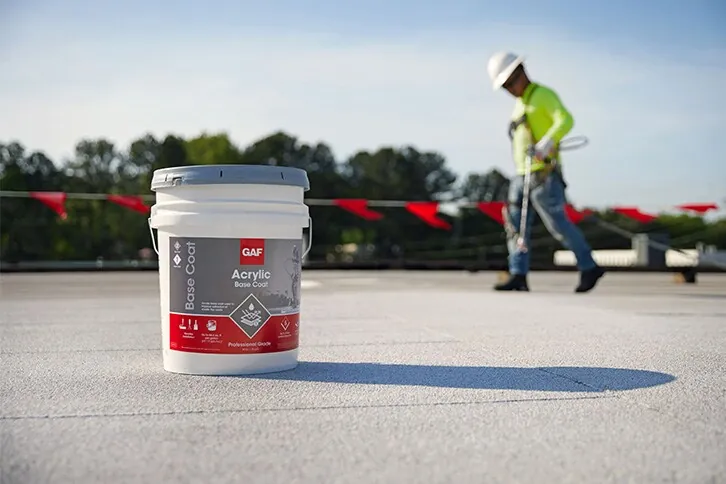
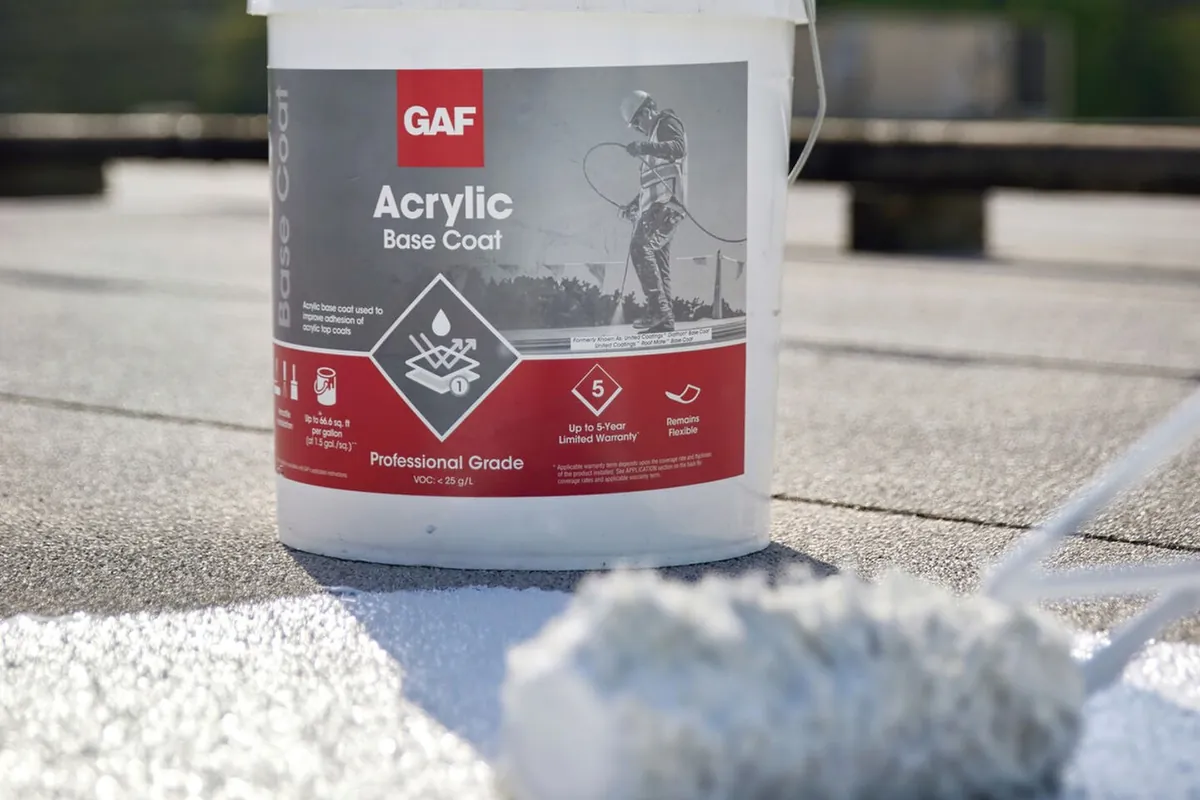
GAF acrylic base coat and top coat
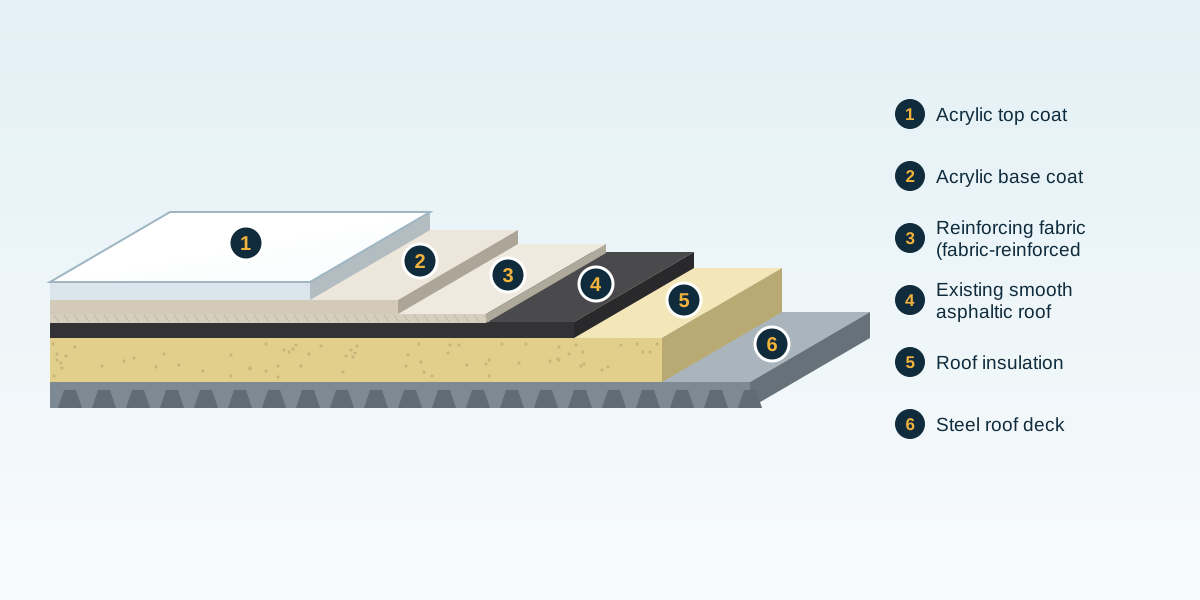
For asphaltic roofs, GAF's acrylic system is a base coat followed by a top coat. The base coat improves adhesion of the top coat and helps block asphalt from bleeding through the white finish. GAF specifies acrylic over asphaltic for 10 or 15-year terms.
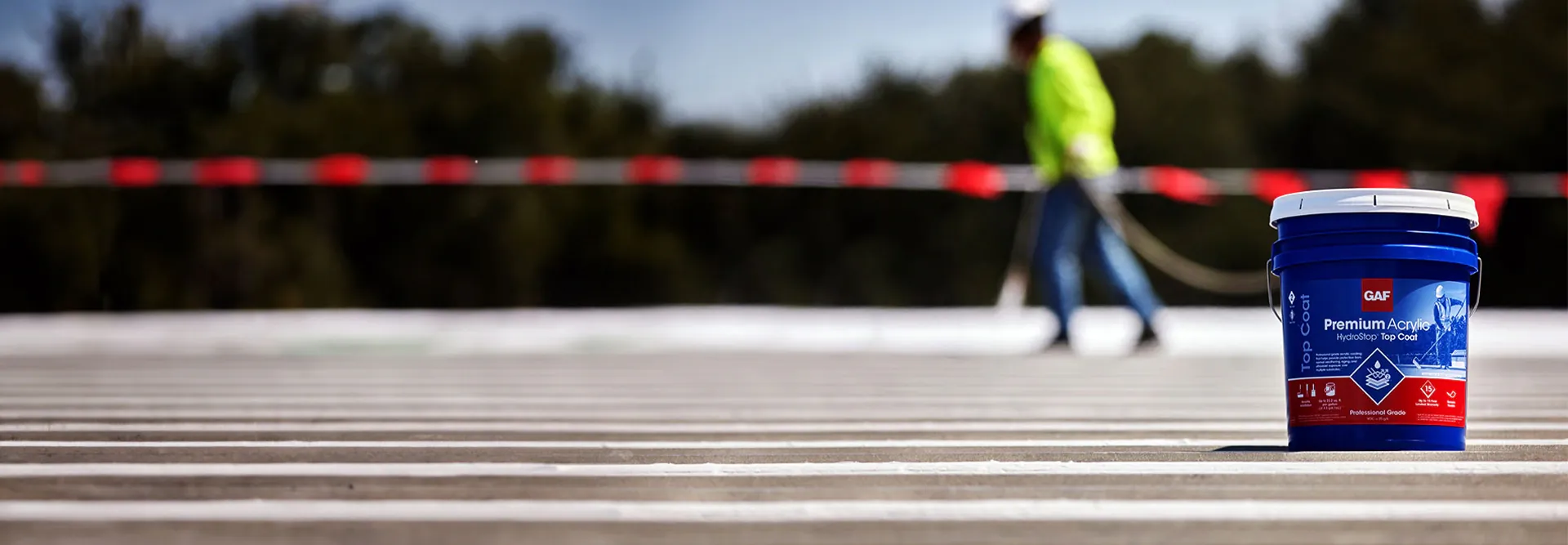
GAF Premium Acrylic HydroStop system
HydroStop is GAF's fully reinforced acrylic system: fabric embedded in a base coat, then two coats of HydroStop top coat. GAF describes it as "an affordable solution to extend the life of structurally sound metal roofs," specifies it for 10, 15 or 20-year terms, and lists adhesion to metal, structural concrete, TPO, PVC, EPDM, polyiso and asphaltic roofs. GAF also states that the assembly meets FM 4470 and points to FM's RoofNav listings for the actual assemblies, so if your insurer requires an FM-approved roof, the specific assembly gets checked there.
How an Acrylic Restoration Goes On
GAF's published steps for acrylic over asphaltic roofs:
- Qualify the roof: clean, dry and tight, with a moisture scan to find every wet area and an adhesion test.
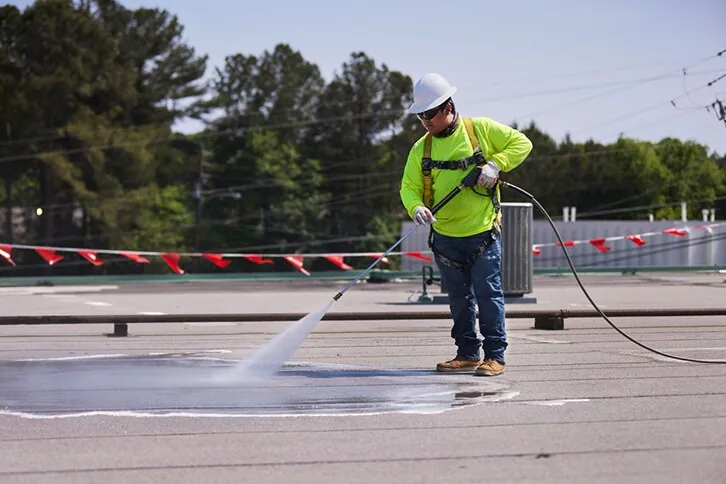
- Prepare: wet membrane and insulation replaced with like material, then the roof power washed.
- Detail: seams sealed with GAF Premium Brush-Grade Acrylic Flashing; loose seams, alligatored areas, curbs, penetrations and drains reinforced with flashing and GAF Premium Fabric.
- Base coat: GAF Acrylic Base Coat, brushed, rolled or sprayed.
- Top coat: GAF Acrylic Top Coat to the specified rate, each coat fully dry before the next, and no more than 1.5 gallons per square in a single coat.
On metal roofs the HydroStop steps add priming of rusty areas with GAF Metal Roof Primer and encapsulating every exposed fastener.
Acrylic and Houston Weather
Because acrylic is water-based, the weather on application day matters more than it does with silicone. The Roof Coatings Manufacturers Association's general guidance for water-borne coatings is an air temperature of 50°F and rising, with no rain for the next 24 hours, and GAF notes that acrylic usually needs about 24 hours to cure before the next coat. In Houston, cold snaps are rarely the problem; pop-up summer storms are. Acrylic coats get scheduled around the forecast, which can add days to a job.
Acrylic vs. Silicone at a Glance
| Acrylic | Silicone | |
|---|---|---|
| Ponding water | Restricted by acrylic data sheets | GAF: stands up to ponding water |
| Cost per square | More economical (GAF) | Higher |
| Time between coats | Usually about 24 hours (GAF) | Often the same day (GAF) |
| GAF terms over asphaltic | 10 or 15 years | 10, 15 or 20 years |
| GAF terms over metal | Up to 20 years with HydroStop | 10, 15 or 20 years |
Both systems can be covered by GAF's warranties when installed by a certified contractor; see how the GAF coating warranty works. For a rough budget, use the roof coating cost calculator.
Sources: GAF acrylic over asphaltic · GAF HydroStop system · GAF roof coatings · Roof Coatings Manufacturers Association FAQs.
Acrylic Roof Coating FAQ
Commercial roof coating in Houston typically runs about $2.50 to $4.50 per square foot, and acrylic tends to sit toward the lower part of that range because GAF's acrylic coatings cost less per square than silicone. The final price depends on the system, the warranty term, prep and repairs, and how much detail work the roof needs.
Yes, if the roof drains. Acrylic data sheets restrict the material from surfaces prone to ponding water, so a flat roof that holds water after rain should get silicone instead, or have its drainage fixed first.
Over asphaltic roofs, GAF specifies its acrylic base and top coat system for 10 or 15-year terms. GAF's fabric-reinforced Premium Acrylic HydroStop system is specified for terms of up to 20 years on structurally sound metal roofs.
Sloped metal roofs shed water, which suits acrylic, and GAF built its HydroStop acrylic system specifically to extend the life of structurally sound metal roofs. Rusty areas are primed and every exposed fastener is encapsulated before the coating goes on.
GAF notes acrylic usually needs about 24 hours to cure before the next coat, and each coat must be fully dry before the next goes on. Acrylic also needs dry weather: the industry guidance for water-borne coatings is 50 degrees Fahrenheit and rising with no rain for 24 hours.
Not sure whether your roof drains well enough for acrylic? Call (832) 224-3435 or request a free roof survey and we'll check.