
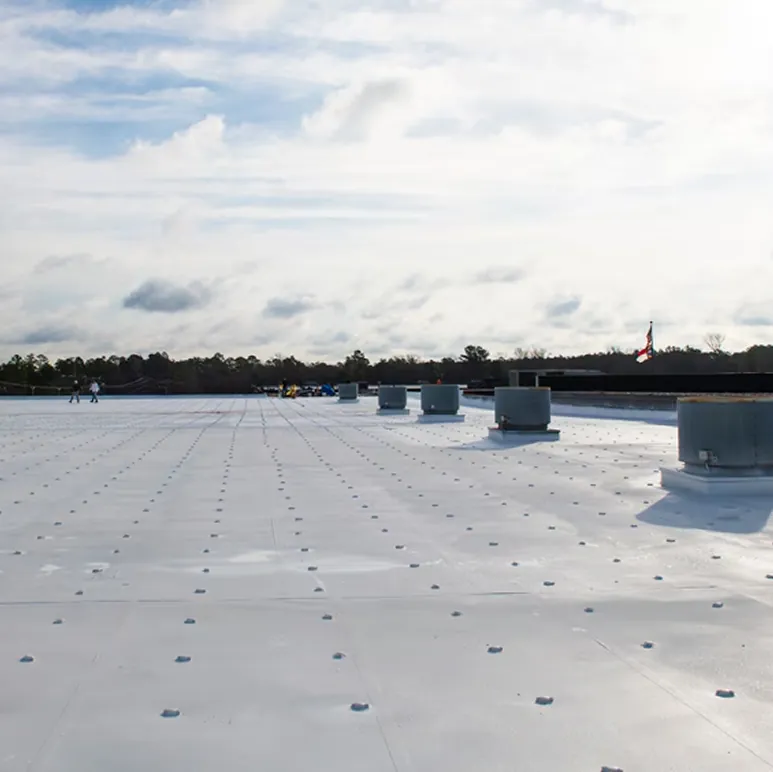
TPO & PVC roof restoration means coating an aging single-ply membrane instead of tearing it off. The membrane stays in place as the base of the new system; its seams, flashings and penetrations are reinforced; and a GAF coating goes over the whole roof. GAF lists aged single-ply among the roofs its silicone coatings restore, and its HydroStop acrylic system lists adhesion to TPO and PVC.
The economics are the same as any coating: from $2.50 per square foot in Houston, typically about a third of the cost of a new roof. The catch is timing. A single-ply roof is a restoration candidate while the membrane is attached and the insulation under it is dry. Once water has been getting in for a while, the conversation turns to replacement.
Is Your Single-Ply Roof a Candidate?
Usually a good candidate
- The membrane surface is weathered or chalky, but still flexible and attached
- Leaks are at a few seams, flashings or penetrations, not across the field
- The moisture survey finds dry insulation, or only small wet areas
- The coating passes an adhesion test on your membrane
Usually not a candidate
- Wet insulation across large parts of the roof
- Membrane that is loose, torn or failing across the field
- A roof already recovered over another roof, with damage in both
- Coating that fails the adhesion test on that membrane
Why Seams Decide It
On a single-ply roof, the field of the membrane usually outlasts its seams, flashings and the details around rooftop equipment. That is where water gets in, and where it gets into the insulation. The Roof Coatings Manufacturers Association notes that a cured coating forms an elastic film that bridges small cracks and membrane seams, and a restoration adds fabric reinforcement at the seams and details that need it before the field coat goes on.
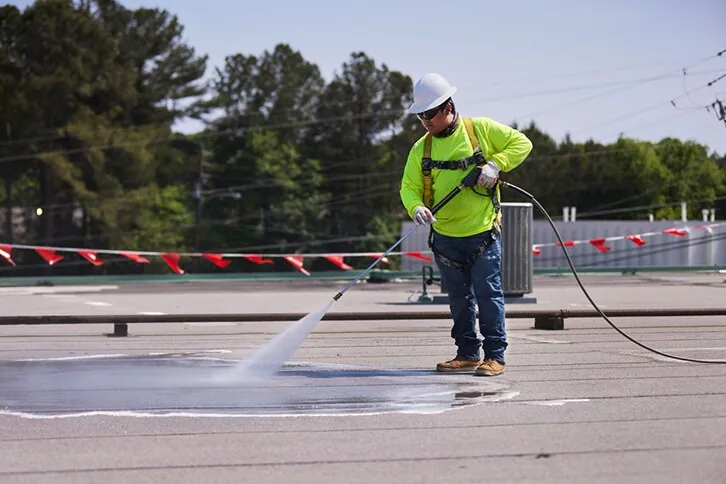
The RCMA also warns that pressure washing has to be done carefully so it doesn't disturb the membrane, particularly at adhered seams. Cleaning a single-ply roof for coating is not a job for a pressure washer and no plan.
How a Single-Ply Restoration Runs
- Survey: walk the roof, probe seams and flashings, and scan the assembly for trapped moisture.
- Adhesion test: test patches on your membrane show which coating and primer will bond. Single-ply surfaces vary, so this step is not optional.
- Repairs: wet insulation and membrane cut out and replaced, open seams repaired, loose flashings re-secured.
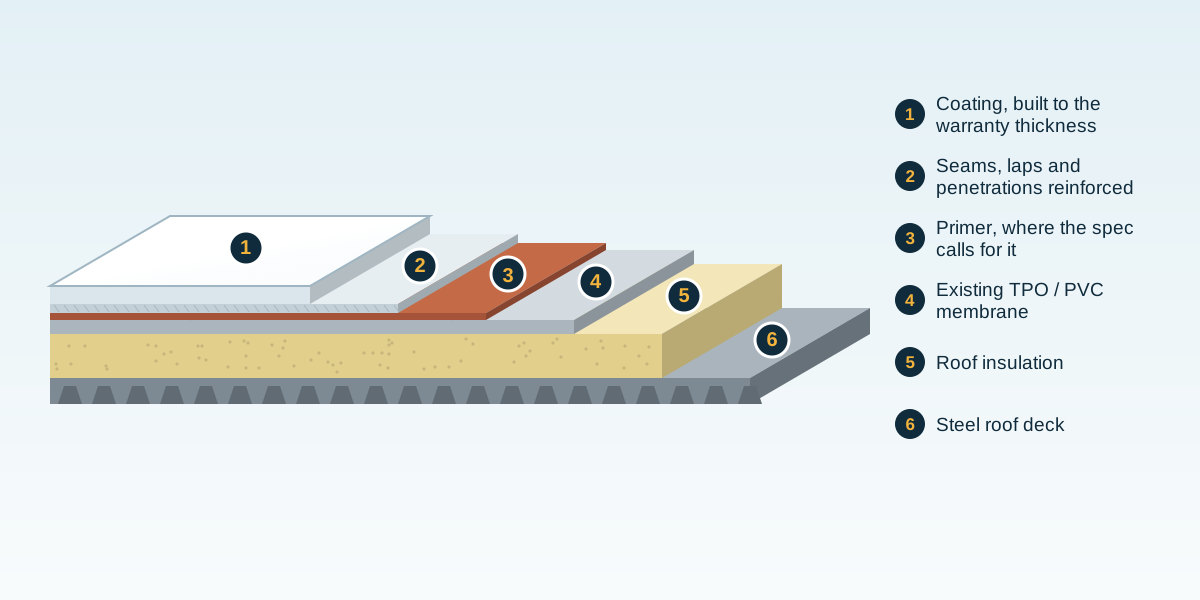
- Clean and prime: the roof is cleaned without damaging the seams, then primed where the coating manufacturer's specification calls for it.
- Reinforce details: seams, curbs, pipes and drains sealed and reinforced with fabric.
- Coat: the GAF coating goes on to the thickness for the warranty term in the proposal.

Check Your Existing Roof Warranty First
If your TPO or PVC roof is still under its original manufacturer warranty, read it before coating. The RCMA points out that applying a coating to a roof that is still under warranty may affect that warranty. If the original warranty is close to running out or already gone, a GAF coating warranty is a way to put coverage back on the roof. See how the GAF coating warranty works.
Silicone or Acrylic for TPO & PVC Roof Restoration?
A flat single-ply roof that holds water after rain points to silicone. A single-ply roof that drains well can be a candidate for acrylic, which costs less per square foot. The survey and adhesion tests settle it. For a rough budget, use the roof coating cost calculator.
Sources: GAF roof coatings · GAF HydroStop system · Roof Coatings Manufacturers Association FAQs.
TPO & PVC Roof Restoration FAQ
Yes, if the membrane is still attached and sound and the insulation under it is dry. GAF lists aged single-ply among the roofs its silicone coatings restore, and adhesion tests on your membrane confirm which coating and primer will bond before anything is quoted.
Coating a commercial roof in Houston typically runs about $2.50 to $4.50 per square foot, compared with $8 to $16 per square foot to replace it. Seam repairs, wet insulation replacement and the warranty term decide where a single-ply restoration lands in that range.
When the insulation under it is wet across large areas, the membrane is loose or failing across the field, or the coating won't pass an adhesion test. A coating over a wet roof seals the water in, which is why the moisture survey comes first.
It may. The Roof Coatings Manufacturers Association advises owners to check any warranty on a newer roof before coating it, because a coating may affect that coverage. Read your warranty or ask the membrane manufacturer before you go ahead.
Silicone is the usual choice on flat single-ply roofs because it stands up to ponding water. Acrylic can work on a single-ply roof that drains well and costs less per square foot. Adhesion testing on your membrane is part of the decision.
Is your TPO or PVC roof still a candidate? Call (832) 224-3435 or request a free roof survey to find out.